


The Norwegian school system is changing – but not necessarily for the better. Our recent survey of over 170 primary school teachers in Lillestrøm and Bærum reveals major challenges that stretch teachers to their breaking point.
Rising time pressure is nothing new – but the data shows it has now reached critical levels. As discussed in our article on overworked teachers, 72% report that their ability to follow up each student has worsened in recent years. The Norwegian Union of Education highlights lack of time as a central issue – which our survey now clearly reflects.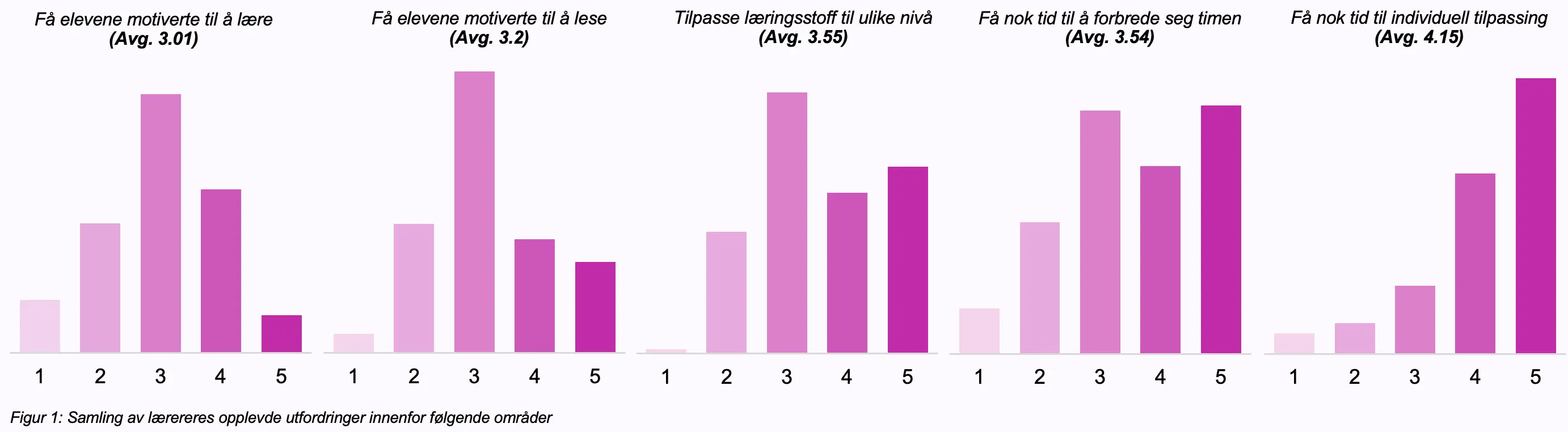
 A multiple regression analysis shows significant negative relationships between well-being and both “having enough preparation time” (coefficient: -0,43; p = 0.026) and “adapting to different levels” (coefficient: -0.32; p = 0.08). Other challenges show weak negative effects. In practice: more challenges = lower well-being, especially lack of preparation time and the ability to differentiate instruction.
In open responses, teachers reported many recurring issues. Increasing disruptive behavior, more students with no language skills, and widening academic and socio-economic gaps – all consistent with findings from recent NIFU and TALIS reports.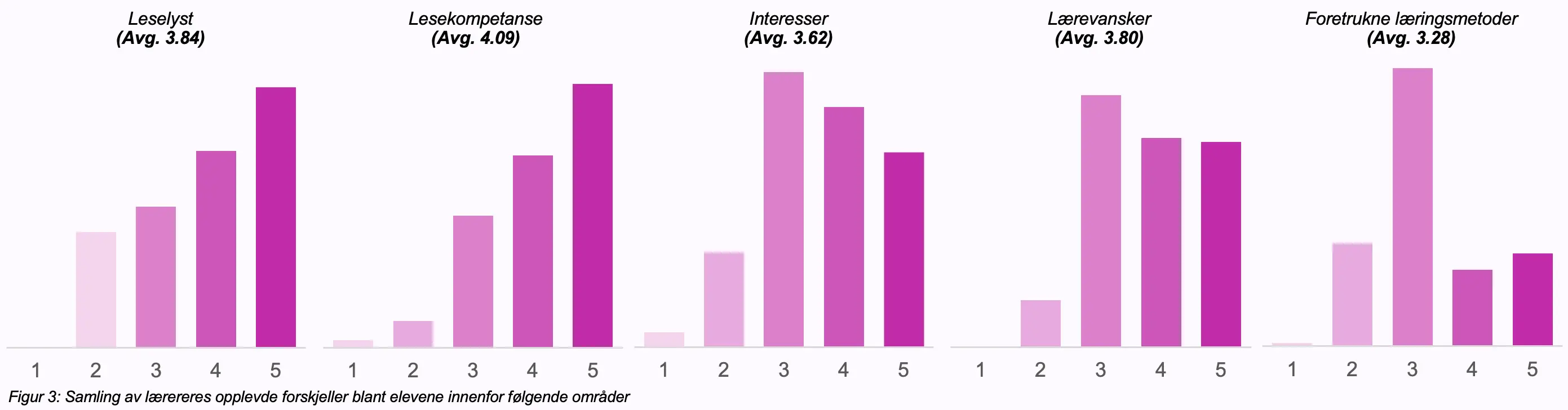 These indicators show both high averages and clear linear patterns. Other areas also show variation but are less structured.
Time – the scarcest resource in Norwegian schools?
Among all the challenges teachers rated, three stand out as particularly demanding: adapting learning materials to different levels, having time to prepare lessons, and following up each student individually. The latter is clearly the biggest challenge (Figure 1).Rising time pressure is nothing new – but the data shows it has now reached critical levels. As discussed in our article on overworked teachers, 72% report that their ability to follow up each student has worsened in recent years. The Norwegian Union of Education highlights lack of time as a central issue – which our survey now clearly reflects.
How do these challenges affect teachers’ well-being?
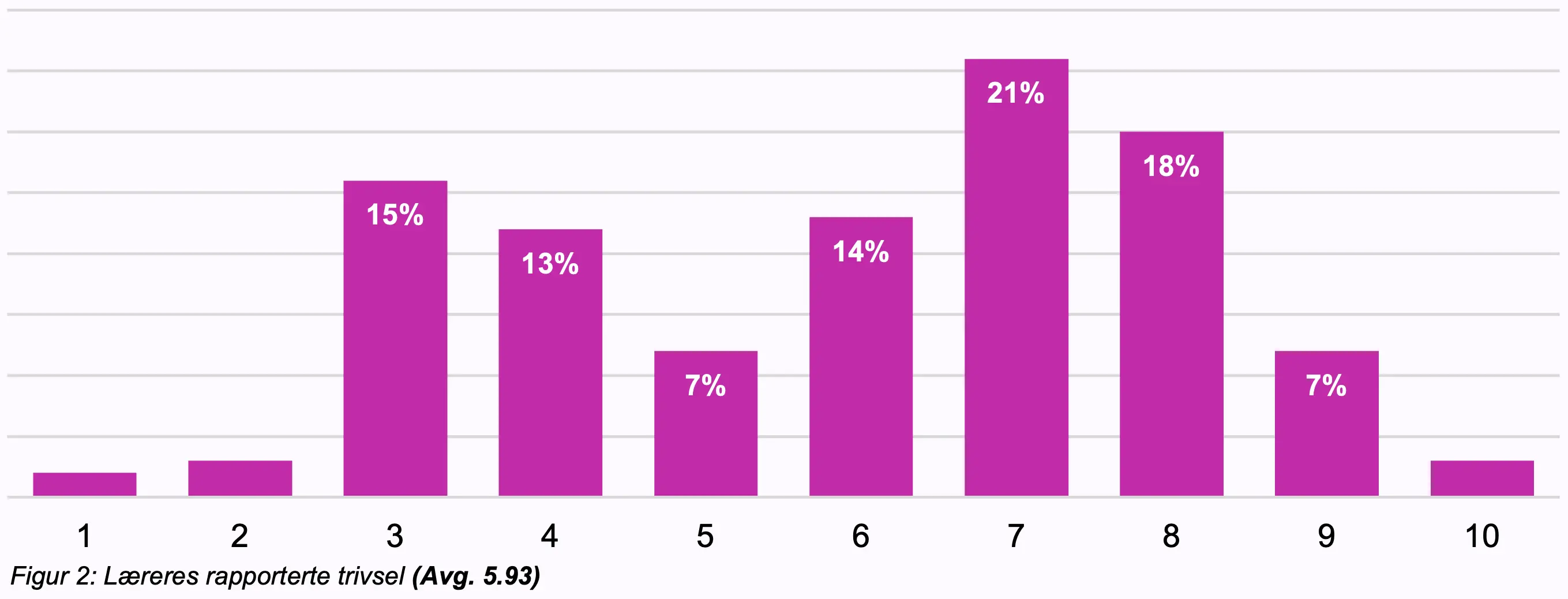
Challenges are one thing – whether they reduce well-being is another. As seen in Figure 2, reported well-being varies widely, with an average of 5.93/10. This is notably lower than the TALIS report, where 9/10 teachers reported job satisfaction. Despite the lower average, 72% of our respondents reported 5 or above – so whether teachers “thrive” becomes a matter of definition.A multiple regression analysis shows significant negative relationships between well-being and both “having enough preparation time” (coefficient: -0,43; p = 0.026) and “adapting to different levels” (coefficient: -0.32; p = 0.08). Other challenges show weak negative effects. In practice: more challenges = lower well-being, especially lack of preparation time and the ability to differentiate instruction.In open responses, teachers reported many recurring issues. Increasing disruptive behavior, more students with no language skills, and widening academic and socio-economic gaps – all consistent with findings from recent NIFU and TALIS reports.
Norway’s growing reading problem
“Reading motivation” and “reading ability” show the largest disparities in our survey (Figure 3) – consistent with Norway’s weak performance in recent international reading studies, as discussed in our article on how Norway must learn from countries that succeed in reading.These indicators show both high averages and clear linear patterns. Other areas also show variation but are less structured.